Hard Techno Explained: Sound, BPM and Artists

Hard techno has gone from a niche corner of the underground to a staple of festival stages. If you have heard a relentless, distorted kick drum pushing past 150 BPM, that was probably hard techno. This guide explains what it is, where it came from, how it differs from the styles it is often confused with, and which artists and places are worth exploring. Sources are linked throughout, and where they disagree we say so.
What Is Hard Techno?
Hard techno is a style of techno defined by speed and impact. A guide from Futureproof Music School describes three defining traits: a faster tempo, distortion as a central element in kicks, basslines and percussion, and a heavily distorted “rumble” kick with a long, reverb-like tail. It also points out that tempo alone does not define the genre, since a clean, hypnotic track at 145 BPM can still be fast techno rather than hard techno. The difference is attitude and sound design as much as speed.
You can see where it sits in the family tree in our types of techno guide, and compare tempos across genres in our BPM by genre cheat sheet.
How Hard Techno Sounds
- A saturated kick: short, loud and often clipped or distorted, with a sub-bass rumble underneath.
- Tempo: fast and steady, usually 145 to 160 BPM.
- Rolling rhythms: layered percussion and bass patterns that keep moving and build pressure.
- Texture: industrial, factory-like noise, metallic percussion and a stripped-back, sometimes “brutalist” feel.
- Little melody: the energy comes from rhythm, repetition and drops rather than a tune, although some commercial versions add trance-style synths and big build-ups.
BPM: How Fast Is Hard Techno?
Most sources put hard techno at about 145 to 160 BPM, with some uptempo tracks going past 160. Beatport’s own hard techno listings, according to our research, mostly sit between roughly 143 and 160 BPM. For comparison, Futureproof gives standard techno as roughly 120 to 140 BPM, while Wikipedia gives the broader hardcore family as 160 to 200 BPM or more.
| Style | Typical tempo | Defining feature |
|---|---|---|
| Classic techno | about 120 to 140 BPM | Groove and hypnotic repetition |
| Industrial techno | about 130 to 150 BPM, depending on source | Dark, metallic texture |
| Hard techno | about 145 to 160 BPM | Distorted, rolling kick and pressure |
| Hardstyle | about 150 BPM | Reverse-bass kick, euphoric melodies |
| Gabber and hardcore | about 160 to 200 BPM or more | Extremely distorted kick, Rotterdam roots |
Sources do not agree on the industrial techno range, with one guide giving 140 to 150 BPM and an editorial BPM database giving 130 to 145, so treat these as guides. See the full comparison in the BPM cheat sheet.
Hard Techno vs Industrial Techno, Gabber and Hardstyle
These labels overlap, and artists often mix them, but the core differences are useful.
- Industrial techno is about atmosphere. It leans on dystopian, factory-like textures and can be slower than hard techno. Some writers call it a subgenre of hard techno, others a separate style.
- Gabber is the Rotterdam ancestor, far faster and more distorted. It is one of the roots of hard techno, not the same thing.
- Hardstyle is a Dutch genre built around a reverse-bass kick and melodic, euphoric synths. Hard techno is more rhythmic and less melodic, and some listeners argue that commercial hard techno borrows hardstyle’s structure.
- Hard techno sits between them: techno’s rhythmic backbone, with industrial texture and harder-edged speed.
A Short History
There is no single origin, and different sources trace different roots.
- Detroit and the first harder techno. Futureproof points to 1980s and 1990s Detroit techno, naming Jeff Mills and Robert Hood for faster, harder offshoots.
- Belgium, Germany and the Netherlands. Wikipedia’s entry on hardcore techno traces the harder sound to the early 1990s, with Belgian new beat as a key precursor. It credits Frankfurt producer Marc Trauner, as Mescalinum United, with the 1990 track “We Have Arrived” as the first hardcore techno track. In Rotterdam, Paul Elstak founded Rotterdam Records in 1992, and in 1993 ID&T launched the Thunderdome concept.
- UK free parties. Spiral Tribe and the free party scene, including the 1992 Castlemorton rave, spread a rawer “tekno” sound across Europe, and Wikipedia credits Spiral Tribe members with pioneering hardtechno and acidcore.
- Berlin and European industrial techno. From the late 1990s, industrial-leaning techno developed in Berlin and elsewhere.
- Consolidation. Futureproof says the modern genre consolidated between roughly 2018 and 2022, with producers in and around Berlin and Tbilisi, and labels such as Monnom Black (run by Dax J) helping it reach festival stages. That is one school’s account, so treat it as a viewpoint.
Why It Boomed in the 2020s
Industry reports describe a clear rise. Beatport’s mid-year 2026 review says harder, faster sounds are still doing serious damage at peak time. Futureproof argues the scene is now split between a commercial wave, with big festival stages and pop-style builds, and a purist underground of smaller clubs that return to slower, rawer techno. Whether that division is as clean as described is debated, and listening to full sets is the best way to judge.
Subgenres You Will Hear
- Industrial hard techno: dark and metallic, often towards the slower end.
- Hardgroove: tribal percussion and a funky swing.
- Schranz: minimal, compressed, repetitive loops.
- Uptempo hard techno: faster than about 160 BPM.
- Peak-time or commercial hard techno: big drops, trance synths and builds.
Artists to Start With
Names that come up repeatedly in guides include:
- Charlotte de Witte, a Belgian DJ and producer associated with dark, driving techno.
- Sara Landry, often credited with helping take the sound to a wider audience.
- I Hate Models, a French artist who runs the Disco Inferno label.
- Nico Moreno, from Lyon.
- 999999999, an Italian duo.
- Indira Paganotto, known for uptempo sets.
- Dax J, behind the Monnom Black label.
- Trym, based in Berlin.
- Jeff Mills and Robert Hood, Detroit pioneers of harder techno.
Listen to a few full sets, not single tracks. Hard techno is designed to build over time, and a set shows how the energy rises and falls.
Where to Hear It Live
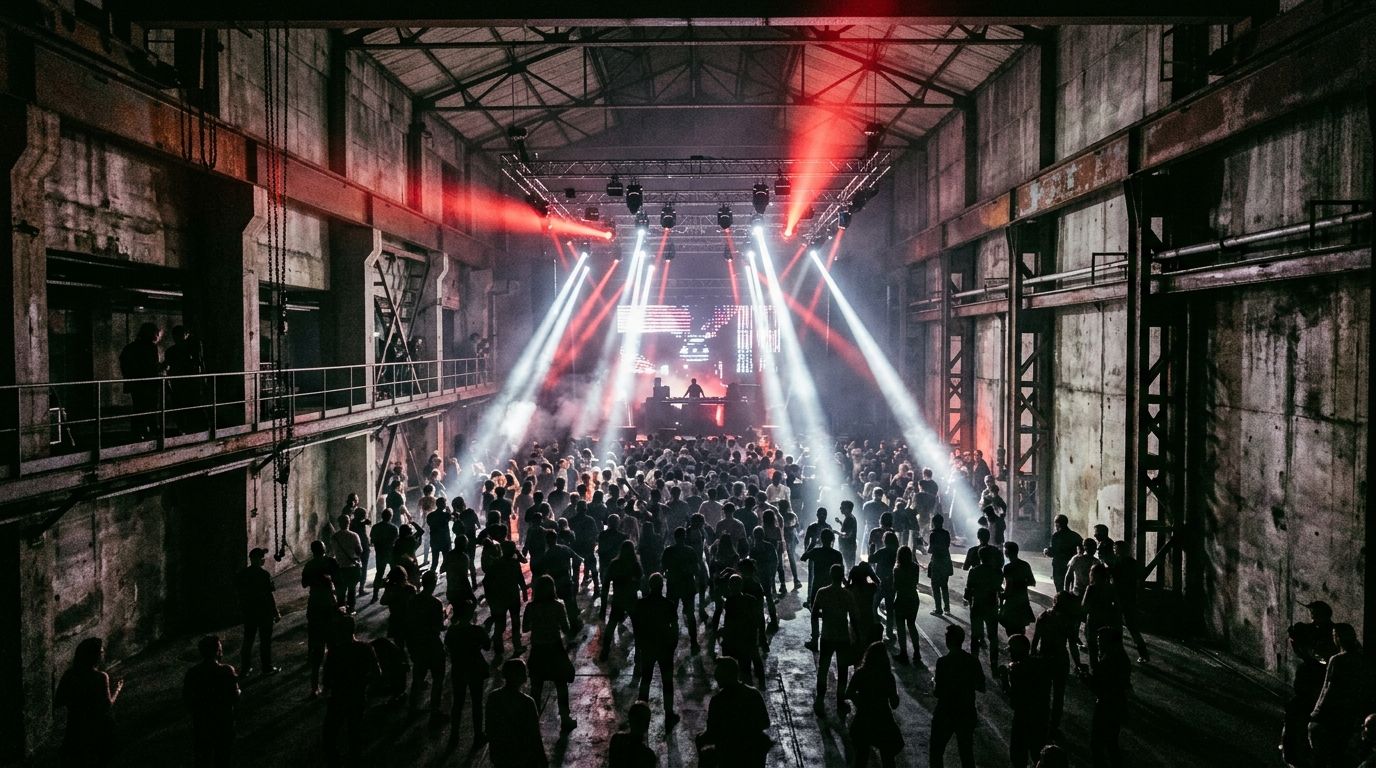
Hard techno is played at festivals such as Awakenings in the Netherlands and at clubs across Europe and North America. In Berlin, one 2026 guide lists OST, a former GDR substation, as a hard techno venue, and says Berghain’s main floor leans hard techno. See our guides to techno clubs in Berlin, Amsterdam and Madrid. Lineups and venues change often, so check each event page before you go.
A Beginner’s Listening Path
- Start with classic techno to hear the foundations, as covered in Techno vs House.
- Move to industrial techno for the darker textures.
- Try a full hard techno set at 145 to 150 BPM.
- Explore uptempo and peak-time styles if you want more speed.
Looking After Your Hearing
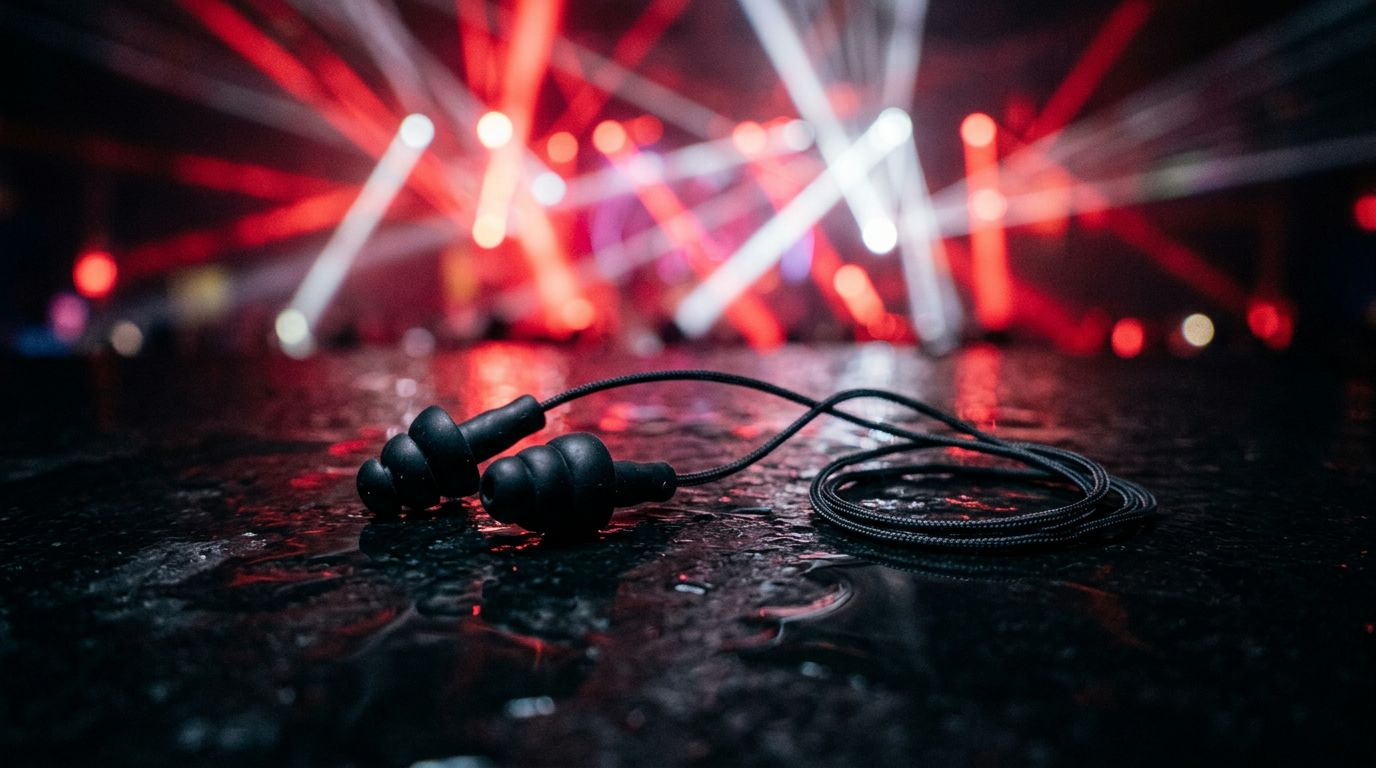
Hard techno is fast, loud and bass-heavy. Earplugs made for music reduce volume evenly so the sound stays clear, and they are a cheap way to protect your hearing on a long night. See our guide to the best earplugs for raves, clubs and festivals. Take breaks away from the speakers and drink water.
Where Does It Go Next?
Industry reports describe tech house still leading the charts, melodic and hard styles rising, and faster sounds back at peak time. Hard techno looks set to stay a major part of club culture, evolving as artists blend it with other genres.
Frequently asked questions
What BPM is hard techno?
Hard techno is typically described as running from about 145 to 160 BPM, with some uptempo styles going past 160. Classic techno sits lower, at roughly 120 to 140 BPM. Beatport's hard techno listings mostly fall between about 143 and 160 BPM.
What is the difference between hard techno and industrial techno?
Hard techno is defined by speed and a distorted, punchy kick. Industrial techno is defined by texture: dark, metallic, factory-like sounds that can sit at slower tempos. Some guides treat industrial techno as a subgenre of hard techno, and others as a separate style, so the labels overlap.
Is hard techno the same as gabber?
No. Gabber is a Rotterdam style from the early 1990s that is faster, typically 160 to 200 BPM or more, with an extremely distorted kick. Hard techno is generally slower and more rhythmic, though gabber is one of its roots.
What is the difference between hard techno and hardstyle?
Hardstyle is a Dutch genre with a distinctive reverse-bass kick and euphoric melodies, usually around 150 BPM. Hard techno uses a distorted kick instead, is more rhythmic and less melodic, and comes from the techno tradition. Some commercial hard techno borrows hardstyle-style builds and drops.
Who are the biggest hard techno artists?
Artists regularly named include Charlotte de Witte, Sara Landry, I Hate Models, Nico Moreno, 999999999, Indira Paganotto, Dax J and Trym, with Detroit's Jeff Mills and Robert Hood as influential earlier figures. Which names count as hard techno varies by source.
Is hard techno popular in 2026?
Yes. Beatport's mid-year 2026 review describes harder, faster sounds as still doing serious damage at peak time, and hard techno appears on major festival stages.
Should I wear ear protection at a hard techno party?
Yes. Fast, loud, bass-heavy music is hard on your hearing, and earplugs designed for music lower the volume without muffling the sound.